

You do not have a software problem.
You have an empty corporate list.
Most hospitals already run a system and are not going to replace it. What they do not have is fifty companies a month being researched, contacted and worked. That is what this is.
What arrives, and what you do with it
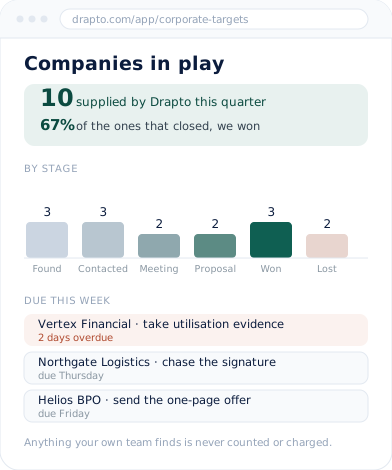
Companies near you, matched to a brief you set: industries, cities, headcount bands, how far you will travel and who to leave alone. Each one arrives researched, with a named contact and a reason it fits — into your pipeline, not a spreadsheet emailed on a Friday.
Then the outreach runs, and what comes back is worked through a playbook your team can edit.
You can see whether it worked
Every company is marked with where it came from. So the number you renew on is not “pipeline” — it is how many of the ones we supplied actually closed, kept separate from the ones your team found.
Most business development cannot be measured. This one is a division sum, and it is on your screen rather than in our deck.
What your own team finds is yours
Leads your people bring in are never counted against your monthly number and never carry a fee. Charging a hospital for its own work is the fastest way to make it stop using the pipeline — and then nobody can see anything.
And the panel delivers it
Winning a 400-person company is only useful if their staff can reach you. Every plan includes the panel: one contract, several clinics, coverage where the employees actually live.
The price, before you ask for it.
Priced on how many companies we work each month — fifty, a hundred and fifty, or four hundred — plus a fixed fee when one signs, decided by the size of the company rather than a percentage of anything.
Start with the half that pays for itself.
Corporate contracts first. The clinical side is an addition, never a precondition.