

The contract is yours.
The coverage does not have to be.
A company with 400 staff will not sign with one address. A panel lets you keep the contract, the billing and the relationship, and borrow the coverage you would otherwise have to build.
Why clinics join a panel
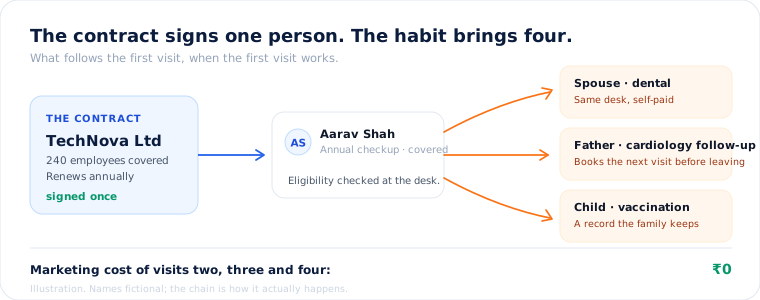
One signature. Four patients.
The employee your contract covers does not come alone. When the first visit works — eligibility answered at the desk, nothing to pay, a record they keep — the spouse’s dental appointment, the father’s follow-up and the child’s vaccination land at the same front desk. You paid to acquire none of them.
Why good corporate contracts are lost after they are won
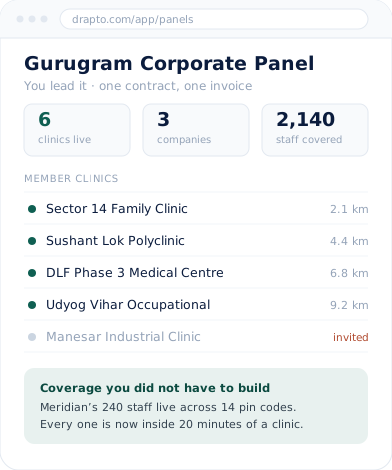
You have three addresses. Their staff live across thirty pin codes. Nobody travels forty-five minutes for an OPD consultation, so utilisation lands in single digits — and low utilisation is the exact number the HR head quotes at renewal.
The contract was never the problem. The map was.
What a panel is, in one paragraph
One arrangement, three parties. You lead it and hold the corporate relationship. Neighbourhood clinics join as members and see covered patients they could never have won alone. The company signs once, gets one invoice, and its staff can walk to an appointment.
What this deliberately does not do.
It is not a shared medical record. A panel is a billing and access arrangement. Membership does not let one clinic read another’s clinical data, and nothing merges patients. Every clinical query stays scoped to the organisation that asked it. The panel answers exactly one question: may this person be seen here, and who pays.
That is enforced in the queries, not promised in a policy.
What the employer gets, without asking you
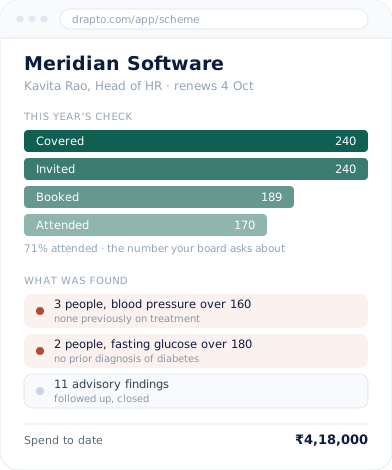
Corporate contracts are lost because nobody can answer “what did we get for our money”. Their HR head logs in and sees it: who is covered, how many attended, what was found and what it cost.
You stop writing that report. They stop asking for it.
Joining somebody else’s panel is free, permanently
If you are a clinic rather than the hospital leading it, membership costs nothing and always will. You are the coverage. Charging you to be somebody else’s reach would end the network before it started.
What you get is corporate patients you had no route to, billed centrally, at a rate agreed before you accept.
What it costs to lead one
The panel is included in every corporate plan — it is how the work is delivered, not a separate line. Plans are priced on how many companies we approach for you each month, starting at fifty.
Start with the half that pays for itself.
Corporate contracts first. The clinical side is an addition, never a precondition.