

Intake · Chart · Rounds · Attest · Nadi
Twenty-seven modules, named so nobody needs a glossary.
Most Indian hospital software names its modules after internal departments. These are named after what a clinician already calls the work — in India and in the markets we are not in yet.
Booking, arrival, eligibility and the queue. A clinic gets its own address to put on a board, a WhatsApp status or a prescription pad, and patients book from it without an account.
drapto.com/book
- Slots drawn from the same calendar the front desk reads
- Phone verification before a slot is held
- Eligibility and payer checked before admission, not at billing
- Room entitlement modelled while the room can still change
In US healthcare intake is the front-of-house process — the exact word for a patient arriving into a practice. It needs no translation in either market.
The consultation and the record. Vitals, notes, prescriptions with allergy gating, and coding that resolves Indian clinical shorthand offline.
drapto.com/my
- SOAP notes and vitals in the consultation flow
- Vernacular prescriptions — Hindi, Marathi, Tamil
- Allergy warnings that do not block, but refuse silent override
- ICD-10 from Indian shorthand, offline, about a millisecond
Chart is the American word for the patient record. Epic's flagship is MyChart; Cerner's is PowerChart. Instantly legible to any US clinician, and already understood in India.
The stay. Handover, drug charts, ward consumption, discharge summaries assembled from the treating doctor's own dated notes.
- Shift handover with a record that closes
- Drug charts and ward consumption tracking
- Notification clocks running per payer from admission
- Discharge summaries composed from dated notes, never generated
Rounds reads the same on both sides of the Atlantic, and it names the thing rather than the module.
Proving you did what you said. Registers, equipment schedules, drills, NABH standards — and an honest account of which standards have no records at all.
- MLC and grievance registers that cannot close incomplete
- Critical equipment tracked separately, no grace period
- Five drill types with date, attendance and learning points
- NABH readiness by standard, including the ones we do not cover
Attestation is the US regulatory verb — CMS attestation, MIPS attestation. It means proving you did what you said, which is precisely what NABH asks.
Answers across every module from live workspace data. Claims, coding, compliance registers, equipment schedules, NABH standards.
- Exposure-sorted worklist — risk multiplied by amount
- Compliance and equipment overdue, named
- NABH readiness answered against standards, not a checklist
- Runs locally; most answers never reach a model
One distinctive name in a set of plain ones is a strength rather than an inconsistency. Nadi is the pulse — and it is the only module that is a proper noun because it is the only one that talks back.
Everything that is built
Twenty-seven modules on one patient record. Structure of the product, not a deployment.
What each domain actually covers.
The ward, the chart and the round
What a clinician touches on shift. Every entry lands on one patient record rather than in a module that has to be reconciled later.
- Labs waitingOrdered and not yet back, by patient
- Drug chartPrescribed, given, held, with the reason
- Ward boardEvery occupied bed on one screen
- Rounds & handoverWhat changed since the last round, written once
- DischargeSummary, medicines and follow-up together
- Patient recordOne file the patient can also open
- Dental chartTooth-level charting and treatment plan
- RadiologyRequest, report and image against the visit
- EmergencyTriage and the clock that starts at arrival
- Ward servicesHousekeeping, transport and the ward request
- Diet ordersThe kitchen reads what the doctor ordered
Where the revenue goes missing
The revenue integrity half. Each of these is a place a rupee that was earned does not arrive, made visible while it can still be acted on.
- Denied claimsWhat was cut, and against which clause
- Claims at riskStill open, and running out of clock
- Doctor payoutsConsultant share reconciled against what was collected
- Revenue drawnBilled, collected and outstanding, itemised
- Buying stockPurchase, supplier and what the ward consumed
The employer side of the same visit
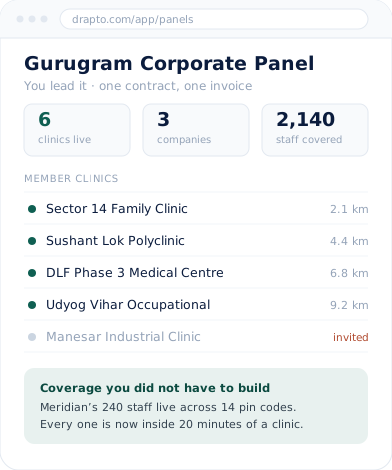
What an employer buys and what a hospital honours at its front desk are the same contract. These are the surfaces where the two meet.
- RosterWho is covered, and from when
- PipelineProgramme uptake stage by stage
- CampaignsA health drive run to a named population
Running the building
The work that is not clinical and not billing, and that an inspection or a complaint will ask you to evidence.
- TheatresList, utilisation and the slot that went unused
- Duty rosterWho is on, and who is covering
- ComplaintsRaised, owned and closed with a record
- VerificationCredentials checked and kept current
- NABH evidenceThe document an assessor asks for, already filed
- Plan comparisonWhat two payer plans actually differ on
Winning the contract
Empanelment and corporate tie-ups are sold, not granted. These are the two surfaces that carry that work.
- Atlas deskThe desk that works an empanelment or tie-up
- Account intelligenceWhat is known about the account before the call
Why the names matter more than they look
A module called “OPD Management” tells a buyer where it sits in an org chart. A module called Intake tells them what it does, and it does so in a word that a clinician in Chennai and a practice manager in Chicago both already use.
That is not a plan to sell abroad tomorrow. Drapto is sold in India only, and partnership enquiries are the honest route anywhere else. But naming is the cheapest decision to get right early and the most expensive to change late — so it is worth doing once, properly, while the product is still small.
Start with the half that pays for itself.
Corporate contracts first. The clinical side is an addition, never a precondition.