

Performance conversations that clinicians accept.
Clinical performance discussions fail when they rely on impressions or on revenue alone. Drapto measures activity, contribution and patient satisfaction together, so the ranking is one clinicians are willing to look at.
Your first screen
78
11
2
92%
2Critical result released, nobody opened it41 min
11Discharge summary not assembledblocking
9Procedure performed, not codedcode
6Consent not recorded before the upgradecollect
92%Coded at the point of dischargeon target
Every item here is a record that is incomplete. That it also costs money is the second thing wrong with it.
and follow-ups
revenue alone
not in isolation
over any period
Volume alone is the wrong measure. Everyone knows it.
A leaderboard built purely on revenue rewards throughput and quietly punishes careful care. That is why clinicians disengage from it — and why weighting satisfaction in is what makes the tool usable.
Activity and contribution, in department context
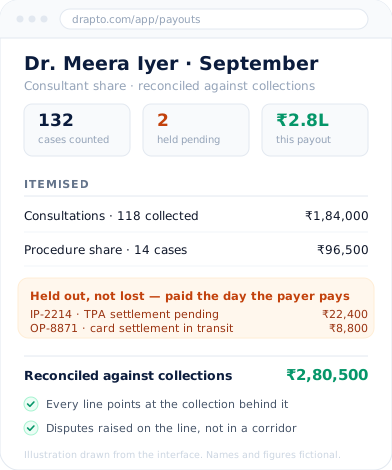
Consultations, procedures and follow-ups counted per clinician, with revenue contribution ranked inside the department rather than across unrelated specialties.
- Consultations, procedures and follow-ups per clinician
- Revenue contribution ranked within department
- Growth trends per clinician over any period
- Consistent definitions across every location
Satisfaction weighted in, from real feedback
Patient satisfaction is drawn from actual feedback rather than anecdote, and weighted into the leaderboard so clinical quality counts alongside activity.
- Patient satisfaction from real collected feedback
- A satisfaction-weighted leaderboard, not a revenue race
- Period comparison to separate a bad month from a trend
- Role-based access so performance data is not open to all
What changes for your team.
Reviews stop being personal
Shared, consistent numbers move the conversation from recollection to evidence.
Quality is protected
Weighting satisfaction means throughput alone does not win, which protects the care your reputation rests on.
Support arrives earlier
A declining trend surfaces while it can still be discussed rather than at year end.
Strong clinicians are visible
Contribution and growth make it clear who is carrying the department — useful at review and at retention time.
Straight answers.
Will clinicians accept being measured?
More readily when the measure is not purely financial. Weighting patient satisfaction is the difference between a tool clinicians check and one they resent.
Where does satisfaction data come from?
Real patient feedback collected through the system rather than occasional surveys or anecdote.
Is individual performance visible to everyone?
No. Role-based access controls who can see clinical performance data.
Can clinicians be compared across branches?
Yes, definitions are consistent group-wide, though ranking is presented within department for fairness.
Make clinical reviews evidence-based.
Built to standards, not to a demo
Built around what you actually do all day.
The screens you open every hour, not the ones in a demo.