

They will not use a benefit
they think you can read.
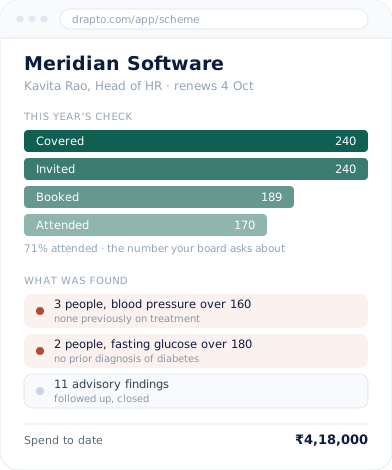
The reason corporate health schemes show 20% uptake is not apathy. It is that an employee assumes HR will see why they went. Fix that and the number moves — and it is a DPDP requirement anyway.
What HR usually gets to see.
- A named list of who attended and why
- Findings visible to a line manager
- A spreadsheet emailed monthly
- Employees who quietly stop going
What HR gets here instead.
- Who attended and what it cost. Never why
- Findings aggregated, suppressed below five people
- A live portal on a link, no login to forget
- Uptake that holds, because the fear is gone
A minimum cohort, enforced in code
No aggregate is shown for a group under five. In a team of three, “one person has raised blood pressure” identifies somebody, and everybody in that team knows it.
Eligibility at the desk, not on the invoice
Whether somebody is covered, and how much of their cap is left, answered in seconds at reception. The alternative is an employee finding out at the counter.
Dependants, properly
Spouse, children, parents where the policy covers them. Each with their own record, and a parent able to see a child’s without seeing another adult’s.
The third who did not know
Across the camps we run, a meaningful share of attendees have something flagged they had never been told about. Following that up is the entire value of the scheme.
What runs without being asked
Improved most weeksA cancellation is offered to the next person in order, with a window, until somebody takes it.
Raised when the prescription is written, chased twice, then it stops. It does not nag.
An abnormal value escalates after thirty minutes if nobody named has acknowledged it.
Twenty-four rules, scored before submission and sorted by exposure rather than raw risk.
Ctrl-K from any screen. These are database queries, so they work offline and cost nothing.
Ask in your own words. Bring your own Anthropic or OpenAI key, or run Ollama on your hardware and nothing leaves the building.
We are deliberate about which is which. Most of what runs here is rules, not a model — because a rule is auditable, works when the connection drops, and cannot invent a figure. We build and improve both every week, and we will always tell you which one answered you.
They will not use a benefit they think you can read.
Twenty per cent uptake is not apathy. Fix the fear and the number moves.
Start with the half that pays for itself.
Corporate contracts first. The clinical side is an addition, never a precondition.